
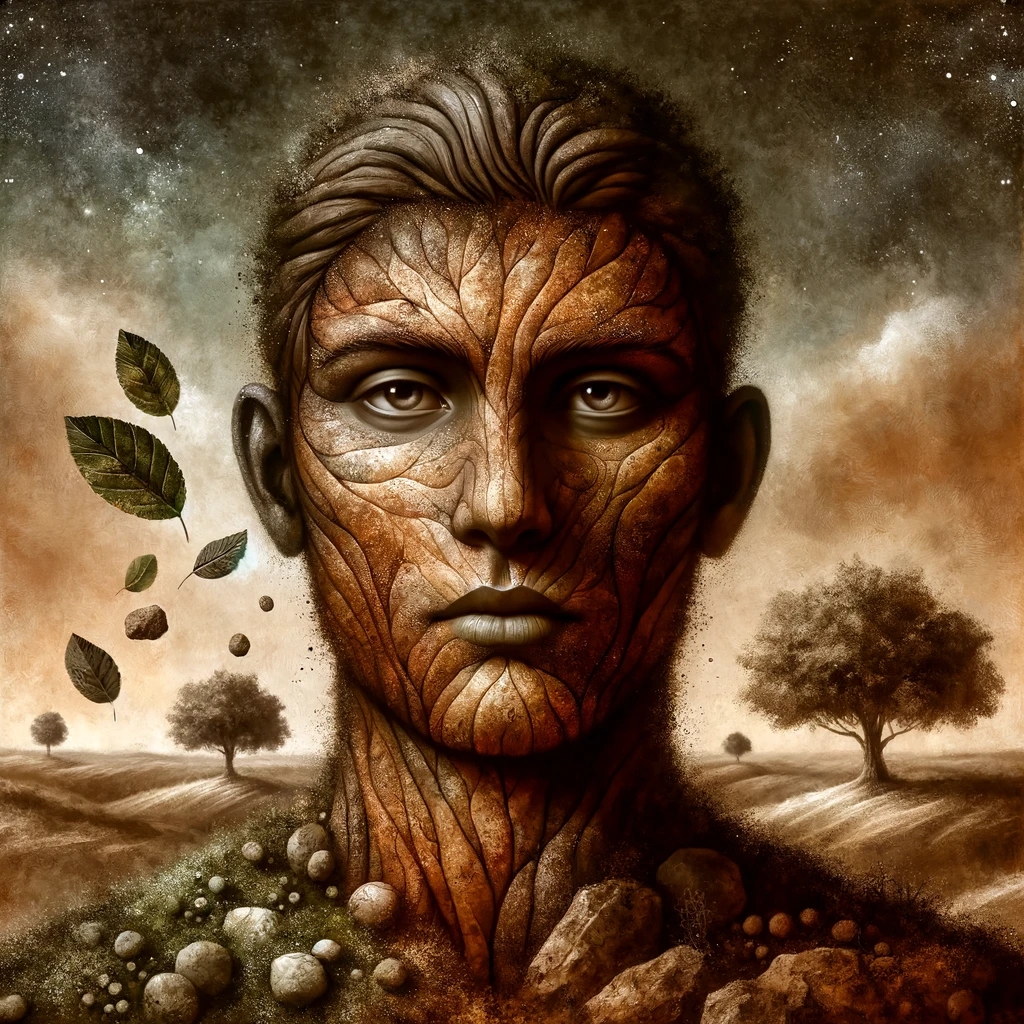
“Which element am I?” is a useful starting question, but a label is only useful if it helps you notice something specific. In this framework, Earth, Water, Wind and Fire describe different patterns you can reflect on. Spirit represents balanced development across those four elements.
The free Element Personality Quiz returns one of the four basic elements. It does not award Spirit. You can use the questions below before or after the quiz to compare a description with your own experience.
Earth: do you look beneath the surface?
Earth emphasises reflection, memory, imagination and depth. You might recognise it when you consider a problem privately, connect a new situation with past experience or prefer a meaningful conversation to speaking for its own sake.
Reflect: When did careful thought help you notice something others missed? When did thinking become repetitive or keep an important idea unspoken?
Try: Share one useful observation before it is fully polished. The aim is to add expression and action to depth, rather than to stop reflecting. Read the Earth profile.
Water: do you create steadiness?
Water emphasises patience, calmness, reliability and routine. You might recognise it when you keep working consistently, prefer time to adjust to a change or help a rushed situation settle.
Reflect: When did patience improve an outcome? When did waiting become a way to postpone a necessary request or decision?
Try: Keep your steady approach while setting a time for one small action. Calmness can support initiative rather than replace it. Read the Water profile.
Wind: do you bring ideas into conversation?
Wind emphasises sociability, optimism, communication and adaptability. You might recognise it when talking helps you understand an idea, you connect easily with a group or a new possibility restores your energy.
Reflect: When did your expression help others participate? When did enthusiasm lead to more beginnings than completed commitments?
Try: Finish a conversation by recording one agreed next step. This gives your ideas somewhere to land without removing their energy. Read the Wind profile.
Fire: do you turn intention into action?
Fire emphasises confidence, initiative, decisiveness and drive. You might recognise it when you name a goal, take responsibility or move a delayed plan forward.
Reflect: When did acting promptly help? When did speed leave another person’s concern unheard or create work that had to be redone?
Try: Ask one question before closing a decision. Listening can improve direction without removing courage. Read the Fire profile.
Spirit: which strength does this situation need?
Spirit is not another box to place yourself in. It means developing the ability to draw on reflection, patience, communication and initiative as needed. You might practise it by thinking carefully, staying steady, discussing the concern and then making a commitment.
An even distribution of quiz answers does not prove balance, and a dominant result does not prevent growth. Read the Spirit guide for the wider explanation.
What if several descriptions fit?
That is compatible with the purpose of this framework. Think about a particular context rather than forcing every part of your life into one description. You may act differently at work, with family or under pressure. Familiarity with a description is not scientific confirmation of a type.
Keep three notes after the quiz: a strength you recognise, a situation where it becomes less helpful and a small behaviour to practise. If the result does not fit, examine your answers and context rather than forcing your experience to match the label.
Read how the quiz is scored and what its percentages mean. For a practical next step, explore communication or responses to pressure. This is an educational reflection activity, not a clinical assessment or a measure of personal worth.